Trip planningBangkok Guide
Bangkok Street Food Guide: What to Eat and Where to Start
On this page
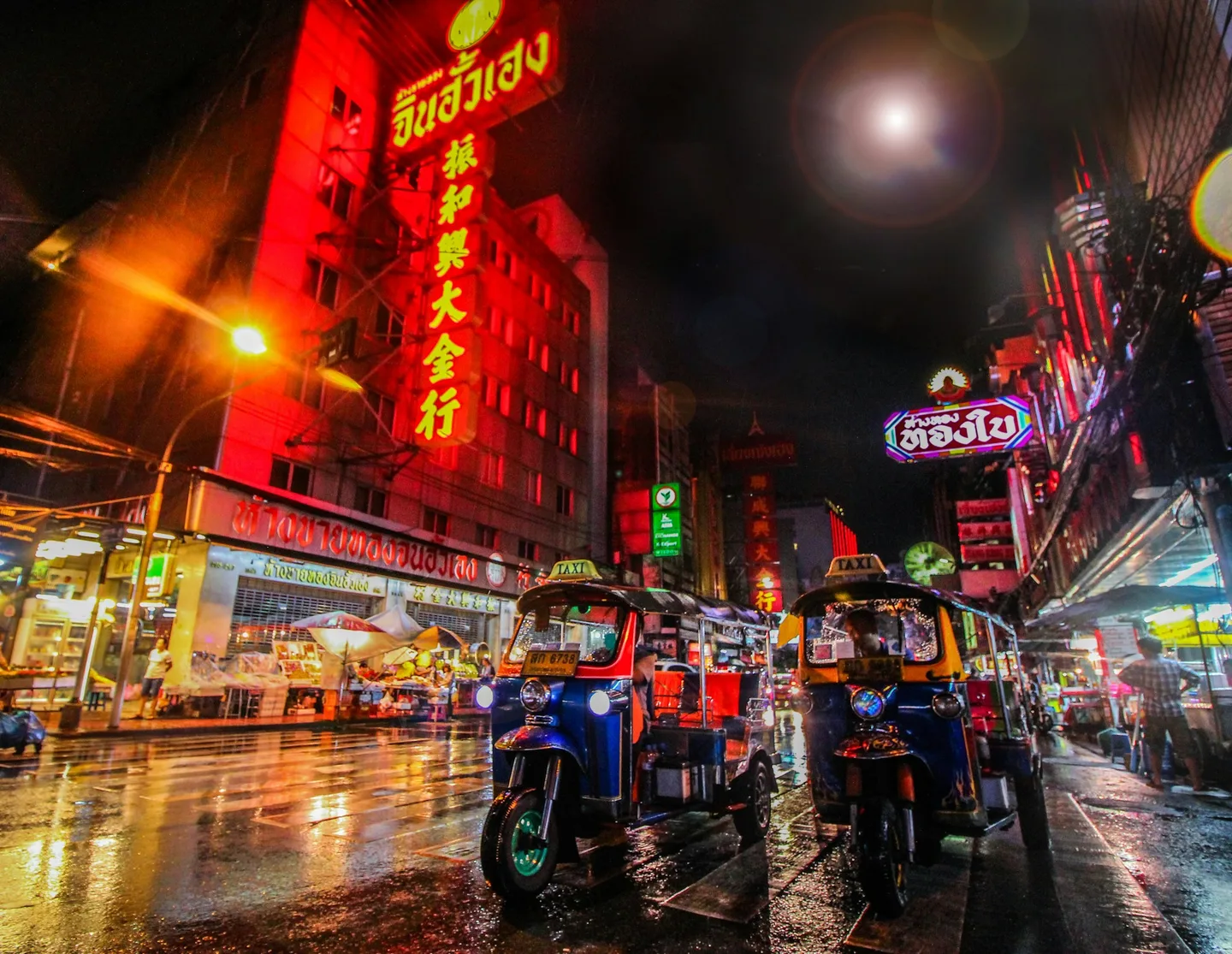
Choose an area by transport and time
We recommend Yaowarat for a first evening because the MRT brings you into a compact Thai-Chinese food district with savoury dishes and desserts within the same walk. Choose Bang Rak for breakfast or lunch; choose Banthat Thong for an evening built around sit-down shops. The table gives suggested arrival times; individual shop hours appear with their addresses.
| Area | Access | Suggested arrival | Start with |
|---|---|---|---|
| Yaowarat | MRT Wat Mangkon | 18:00, Tue–Sun | Kuay jap |
| Bang Rak | BTS Saphan Taksin | 09:00 | Braised pork |
| Maha Chai Road | MRT Sam Yot, then walk | 11:00, except Tue | Pad thai |
| Banthat Thong | BTS National Stadium | 18:00 | Dry suki |
| Or Tor Kor | MRT Kamphaeng Phet | 11:00 | Cooked dishes and fruit |
Yaowarat: Thai-Chinese food after dark
From Wat Mangkon, follow Plaeng Nam Road towards Yaowarat Road. Look for kuay jap, fishball noodles, oyster omelettes and steamed buns. The main road carries traffic: use crossings rather than stepping between cars to reach a queue. Tuesday–Sunday is the better plan for a pavement-stall evening because Monday is a rest day for a number of vendors; Chinatown’s permanent restaurants have their own schedules. Our Yaowarat guide covers the neighbourhood and station approach.
In Reddit’s r/ThailandTourism discussion “What is the best area for street food in Bangkok?”, contributors praise Chinatown’s lively evening dining, while others favour eating near their accommodation. In “Food recommendations”, readers value mall food courts for variety and budget, and question the need to follow Instagram recommendations. A food court is a useful alternative when you want a seat and several menus together. If you want several Yaowarat evenings, staying near MRT Wat Mangkon puts those meals by your room; for one visit, travel from your existing base.
Bang Rak: make this a morning stop
Use BTS Saphan Taksin and head north along Charoen Krung towards the Silom junction. Charoen Saeng Silom, 492/6 Soi Charoen Krung 49, opens daily 07:00–13:00 and takes cash only. Its speciality is braised pork leg with an aromatic gravy, pickles and a separate spicy sauce. Order rice alongside the pork. This is a fixed-address shophouse stop; arriving for dinner misses its entire service.
Maha Chai Road: a named pad thai stop
Thipsamai’s Pratu Phi restaurant is at 313–315 Maha Chai Road, open 09:00–midnight, closed Tuesdays. From MRT Sam Yot, walk north on Maha Chai Road. The signature Superb Padthai uses shrimp oil and prawns inside an egg wrapping. It belongs on a day exploring the old town or Wat Saket; do not add a separate cross-city journey just to tick it off. The original and the mall branches have different hours.
Banthat Thong: cooked meals and an evening dessert
From BTS National Stadium, walk west along Rama I Road, then turn south onto Banthat Thong. This strip includes permanent restaurants and dessert shops. Elvis Suki, 1456 Banthat Thong Road, opens daily 15:30–midnight. Dry suki is glass noodles wok-fried with egg, vegetables and a chosen protein; it is different from Japanese sukiyaki. Choose one main dish here before joining another queue for sweets.
Or Tor Kor and the weekend-market choice
Or Tor Kor is the covered produce-and-prepared-food market beside MRT Kamphaeng Phet, across the road from Chatuchak Weekend Market. Use it for a daytime meal and fruit browsing, including on a weekday; Chatuchak’s full general-market outing belongs on Saturday or Sunday. Ask whether a fruit price is per kilogram or per pack before the seller cuts it.
For a separate weekend food excursion, Khlong Lat Mayom combines food on the canal banks with optional boat rides. It requires onward road travel from the rail network. Choose it when the market itself is the outing, rather than as a quick meal between central sights.
What to eat: a short dish glossary
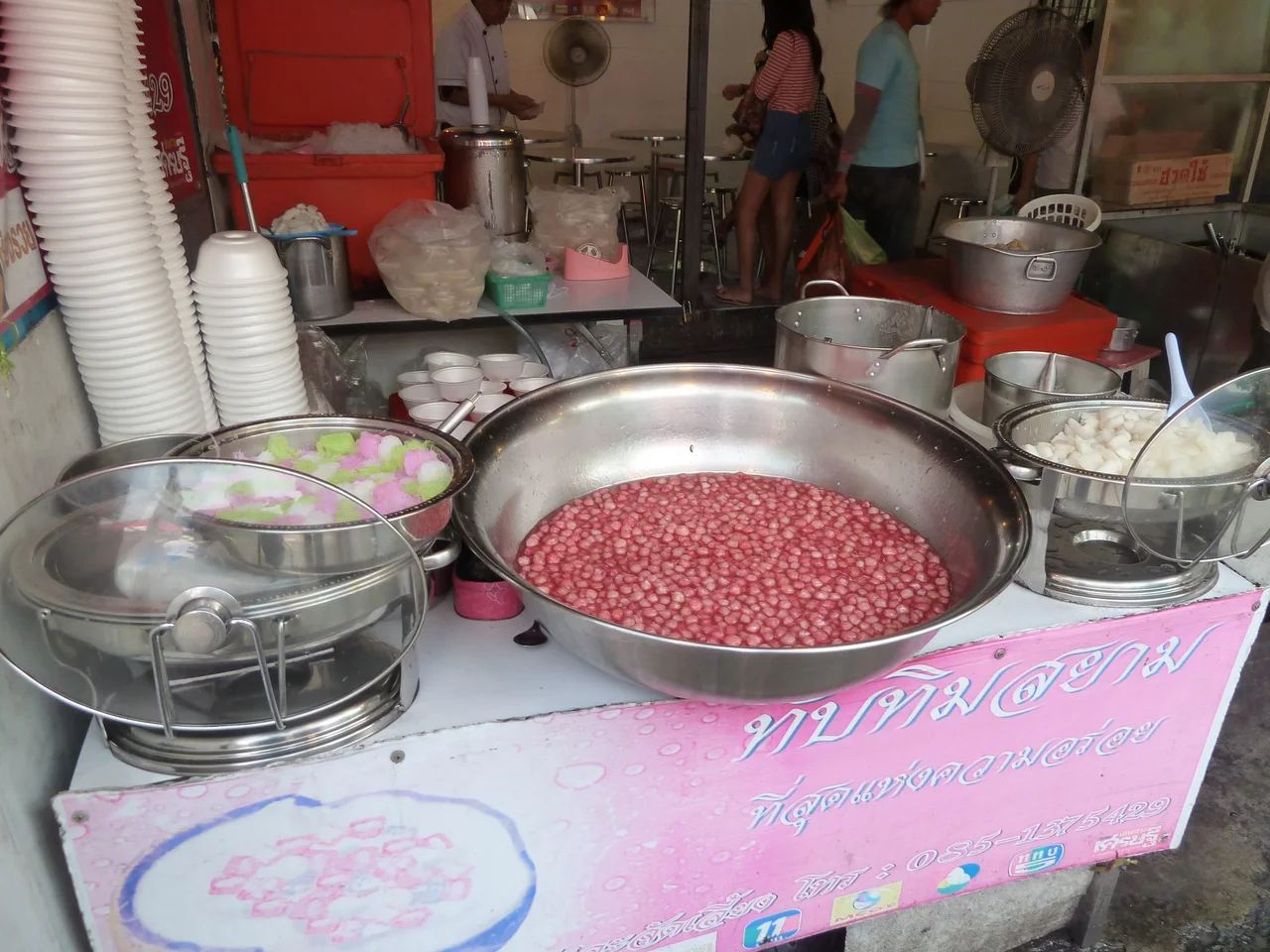

Match the dish to the stall’s equipment: a mortar for papaya salad, hanging chickens for chicken rice, a steamer for buns. A vendor specialising in one dish is easier to order from than a menu with dozens of unrelated dishes. Romanised spellings vary; these names identify the food rather than a particular restaurant.
- Khao man gai: poached chicken over rice cooked in chicken stock, accompanied by a ginger-and-soybean sauce. Keep the sauce separate if you want to control its heat.
- Pad kra pao: a chilli-and-holy-basil stir-fry with meat or seafood, served with rice. A fried egg, kai dao, is an extra to request. The dish is a poor starting point if you cannot tolerate chilli.
- Pad see ew: broad rice noodles stir-fried with soy sauce, egg and Chinese broccoli, with a choice of protein. Dried chilli can be added at the table; taste the noodles first.
- Pad thai: stir-fried rice noodles with a sweet-sour tamarind seasoning. Egg, prawns, peanuts and dried shrimp can appear in different versions. A meat-free plate does not establish that the sauce is vegetarian.
- Kuay jap: rolled rice noodles in a peppery soup, associated with Yaowarat. Pork and offal can be included; ask for the toppings you want before the bowl is assembled. Pepper heat remains even without added chilli.
- Moo ping with khao niao: grilled marinated pork skewers with sticky rice. Confirm the number of skewers and whether the rice is charged separately.
- Som tam: pounded green-papaya salad. The Thai-style version can contain peanuts, dried shrimp and fish sauce; other versions use fermented fish or salted crab. Choose a fully cooked dish instead if avoiding raw food.
- Khao niao mamuang: mango with sweet coconut sticky rice. Ask for a complete portion if a stall also sells mangoes by weight. For a hot snack instead, look for salapao, steamed buns with savoury or sweet fillings.
Plan a three-stop meal
Allow 90 minutes in one district as a planning slot, extending it if you choose a restaurant with a queue. Start with one savoury dish, leave room for a second stop, then choose dessert. For two people, sharing one portion at each stop increases variety; ask the vendor before sharing a table while ordering only one dish.
- Evening in Chinatown: make the first stop a freshly cooked bowl of noodles. Share an oyster omelette at the second stop if seafood suits everyone, then choose a sweet steamed bun for dessert. Keep the walk within Yaowarat and Plaeng Nam so the return to Wat Mangkon is straightforward.
- Morning by the river: make the braised-pork meal the anchor, then continue towards the river for your next sightseeing stop. This suits someone who wants a full meal at one table more than several snack queues; leave the multi-stop tasting for the evening.
- Rain alternative: use the Gold Line to Charoen Nakhon for ICONSIAM. SOOKSIAM on the G floor brings regional cooked food and sweets indoors. It is a mall food setting with shelter and facilities; it serves a different purpose from a pavement food walk.
A wheelchair user or family with a pushchair should favour a venue with indoor seating over Yaowarat’s obstructed pavements. For outdoor plans, our seasonal guide explains the rain and heat trade-offs.
Ordering, paying and controlling the bill
First identify the portion you want, then the protein and any extras. At a noodle stall, choose noodles, meat or fishballs, and soup or dry service. Pointing to a displayed dish or menu photograph is useful; pointing at another customer’s bowl may also copy its offal or extra toppings.
Mai phet requests no chilli heat; phet nit noi requests a little. For a dish cooked from scratch, make the request before cooking starts. A ready-made curry or pepper broth cannot be made mild by leaving off the garnish. Add table condiments only after tasting.
Ask the total before ordering when no price is displayed. Establish whether seafood is charged per piece, per dish or by weight, and ask for the total for the selected animal before it is cooked. Confirm whether rice, an egg, a larger portion or takeaway packaging costs extra. A seafood platter and a bowl of noodles need separate budget decisions.
Carry cash in 20-, 50- and 100-baht notes. Do not rely on a foreign card or banking app because a stall displays a Thai payment QR code. Ask whether to pay at ordering or after eating. At a shared seating area, establish which tables belong to your vendor before sitting down. Food courts may use a stored-value card: read the counter’s top-up and refund conditions before paying.
Vegetarian food, halal choices and allergies
Fish sauce, oyster sauce, shrimp paste, dried shrimp and meat stock can be present without visible meat. Requesting tofu alone does not remove them. Jay food follows a stricter plant-based tradition, often marked by yellow signs; confirm the dish and preparation if avoiding animal ingredients. Eggs and dairy also matter when ordering buns, roti or sweets.
For halal food, choose a stall displaying halal certification and establish that it covers the food being sold. A chicken dish can still involve non-halal stock, sauces or shared preparation. For a serious allergy, communicate the specific ingredient and the need to avoid cross-contact before ordering. If the cook cannot establish what is in a premade sauce or shared fryer, choose another venue. Removing peanut garnish is insufficient for a peanut allergy.
Choosing food with less avoidable risk
Freshly cooked food served steaming hot is the better choice than a tray left lukewarm. Watch for separation between raw ingredients and cooked food, clean utensils and handwashing facilities. A long queue signals demand; it does not establish safe storage or clean water.
Avoid raw seafood, raw salads and pre-cut fruit if you want to reduce foodborne illness risk. Buy fruit you can peel yourself. Choose unopened, factory-sealed drinks; skip ice when its water source is uncertain. The shape of an ice cube does not prove that it is safe. Wash hands with soap before eating; carry hand sanitiser for places without a washbasin.
Other food questions
Do I need to book a street-food tour?
No. The self-guided routes here use public streets and walk-in food stops. A tour can help with interpretation and ordering, but compare the named dishes, dietary arrangements and group size before paying. A tour booking does not automatically remove queues at independent restaurants.
Is tipping expected at a food cart?
A tip is optional at a food cart. Pay the agreed amount and collect your change; rounding up is a personal choice. At a sit-down restaurant, read the bill for a service charge before adding a tip.
Can I photograph the cooking?
Ask before photographing a vendor or entering the working space. Stand clear of hot oil, grills and the order queue. Ask permission before photographing anyone eating at neighbouring tables.
Editorial information and sources
Prepared by the Bangkok Guide editorial team. Addresses, stated opening hours and food-safety guidance checked November 4, 2026. Arrival times and the 90-minute walk are editorial planning suggestions.
Keep exploring
Best Time to Visit Bangkok: Weather, Rain and Crowds by MonthWhere to Stay in Bangkok: Best Areas for First-Time VisitorsBangkok Art and Culture Centre